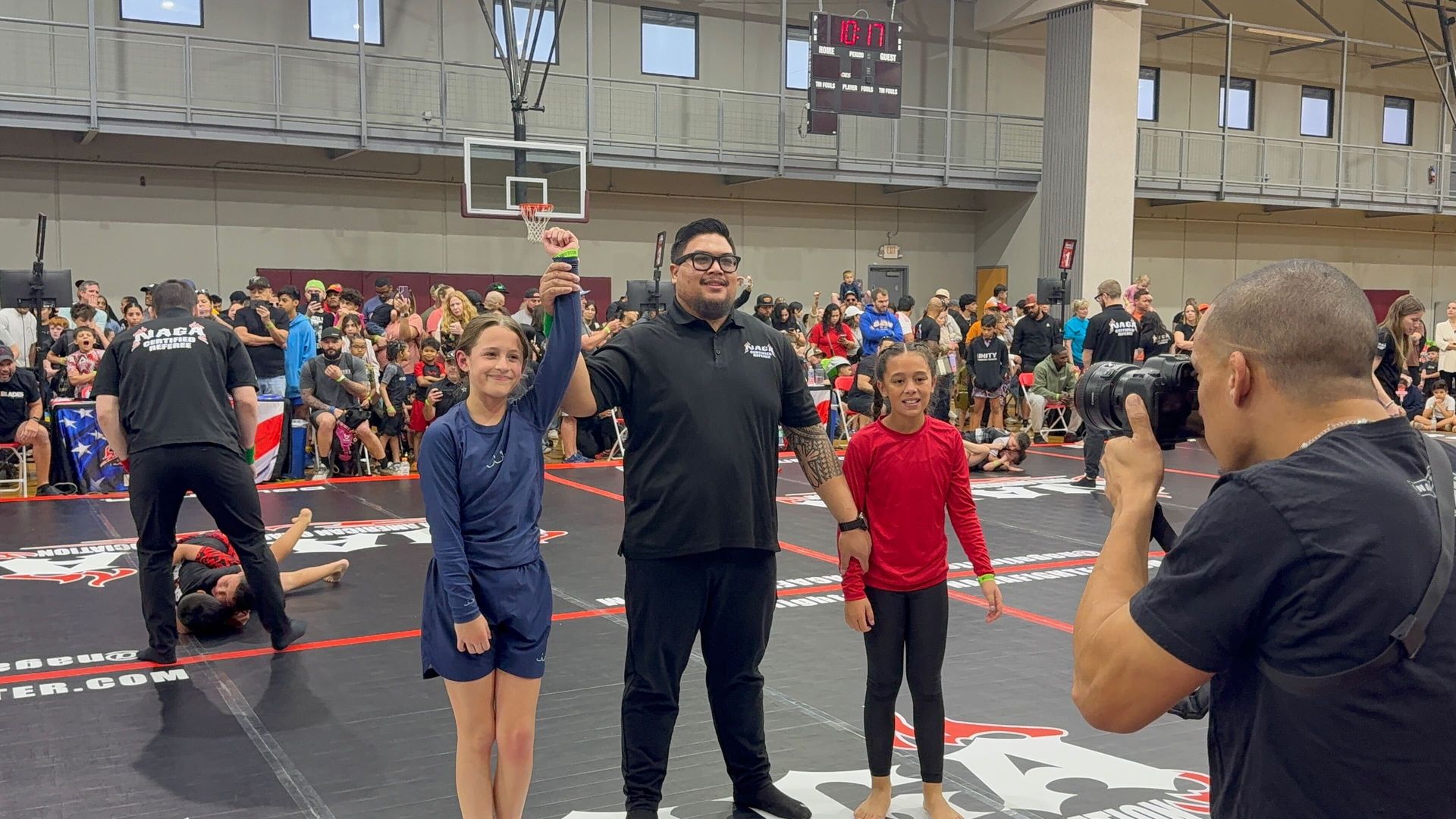
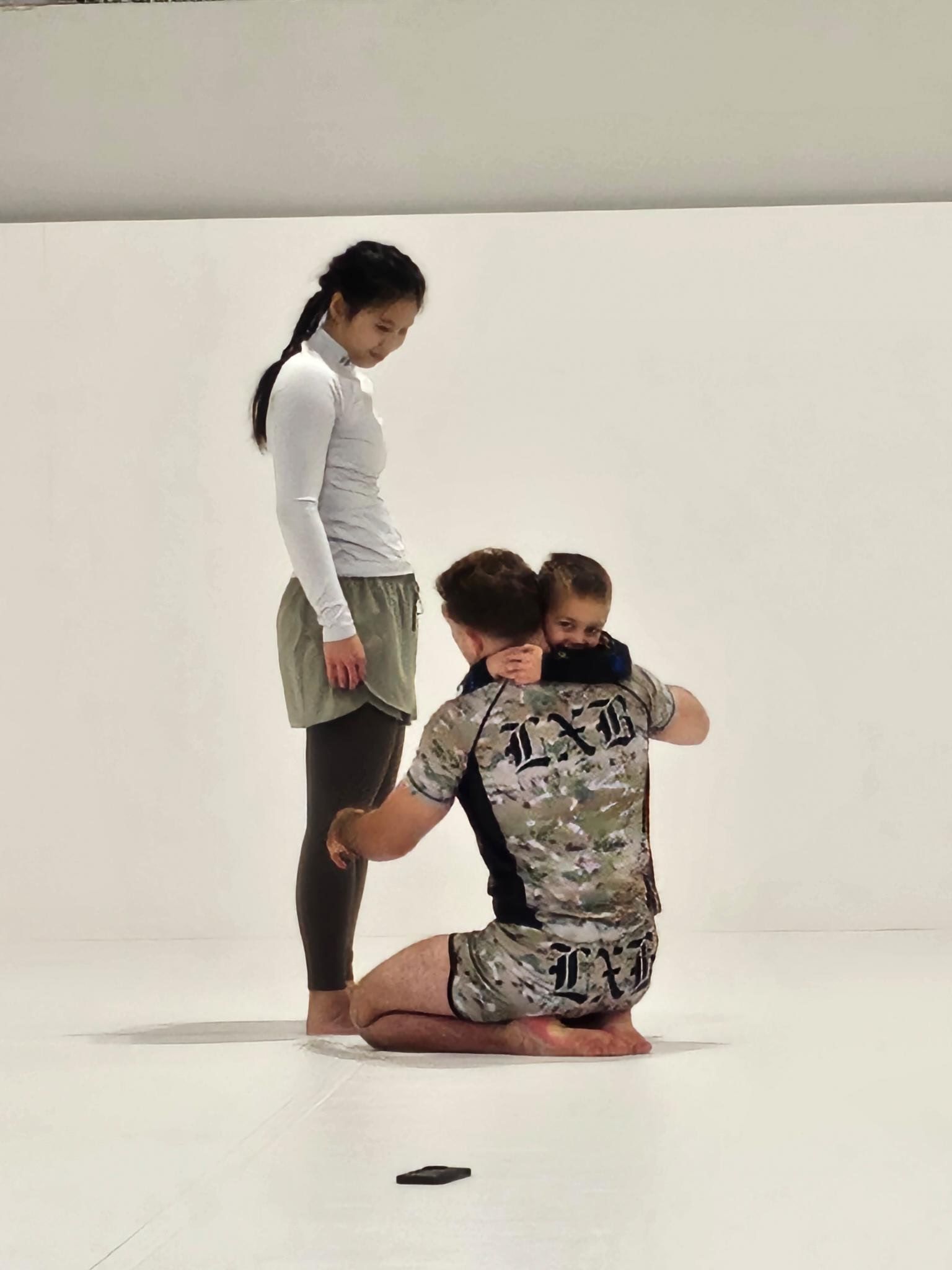
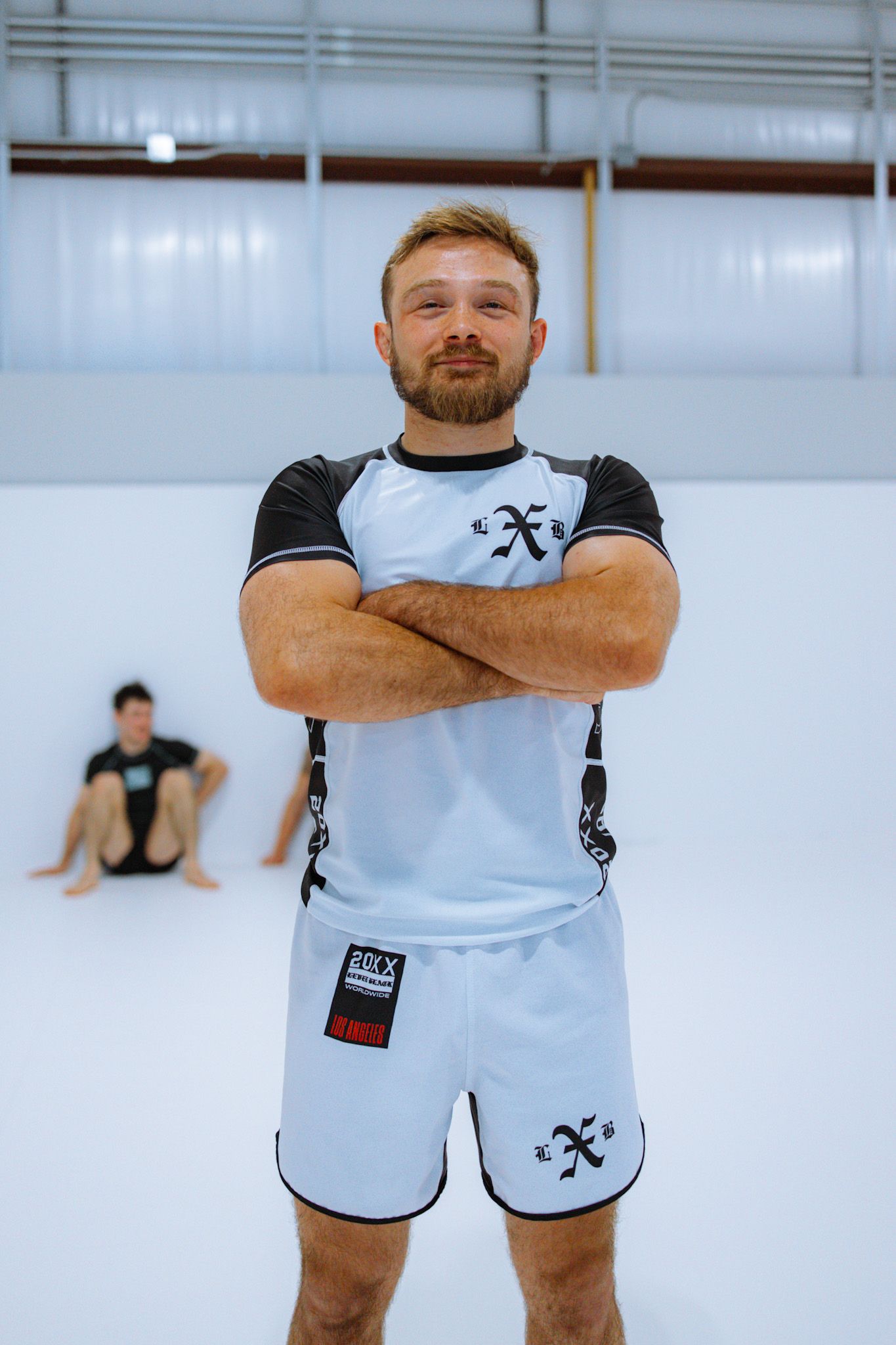
Kids Brazilian Jiu-Jitsu gives children a rare place to practice staying calm, thinking clearly, and trying again when a plan does not work.
Parents often tell us they want more than an after-school activity that just burns energy. They want something that helps their child handle real situations: frustration over homework, friendship drama, nerves before a test, or the moment a coach says, “Try it again,” and your kid wants to quit. Kids Brazilian Jiu-Jitsu is one of the most practical ways we know to train those life skills, because it turns problem solving into something your child can feel and practice, not just talk about.
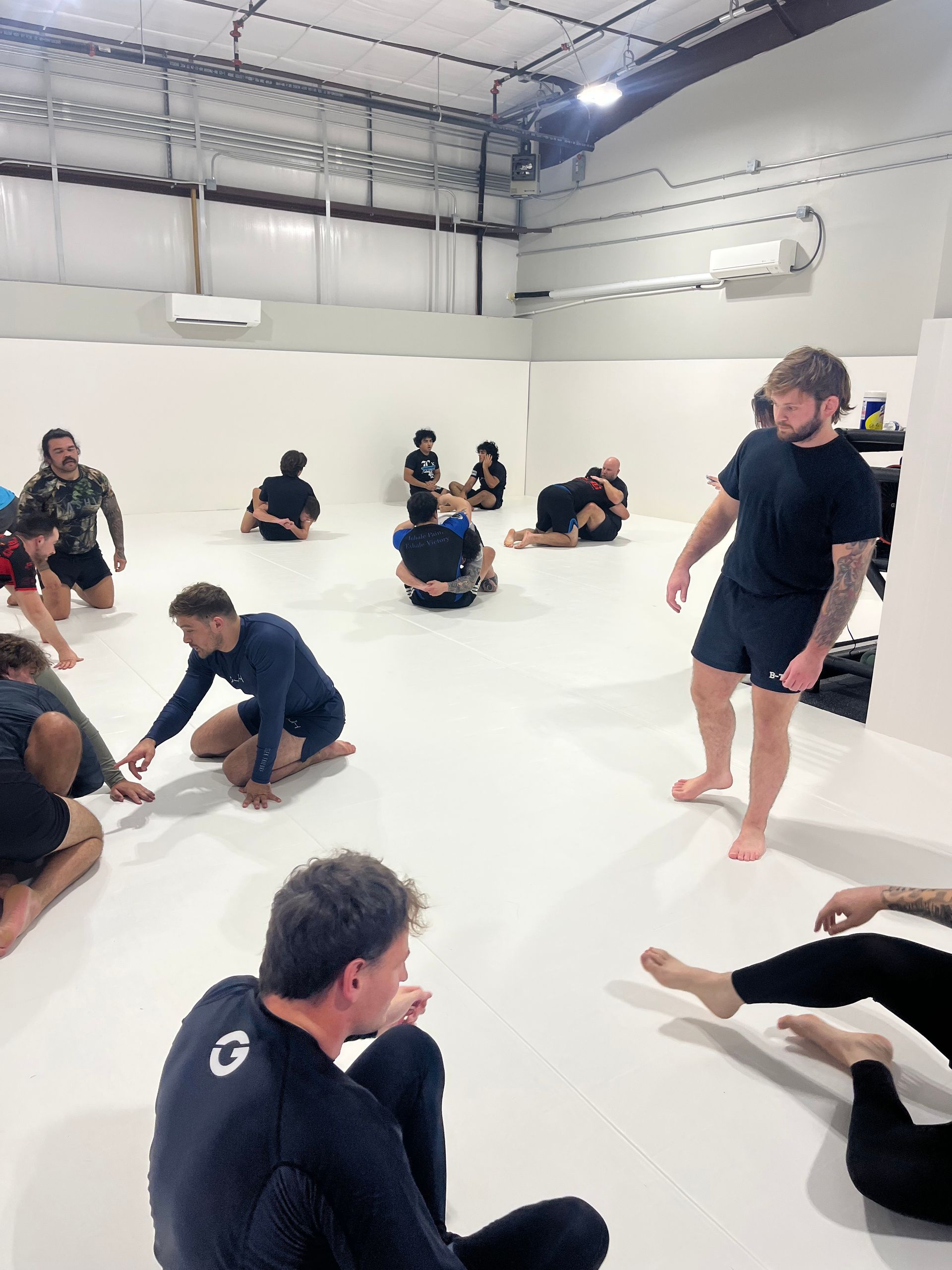
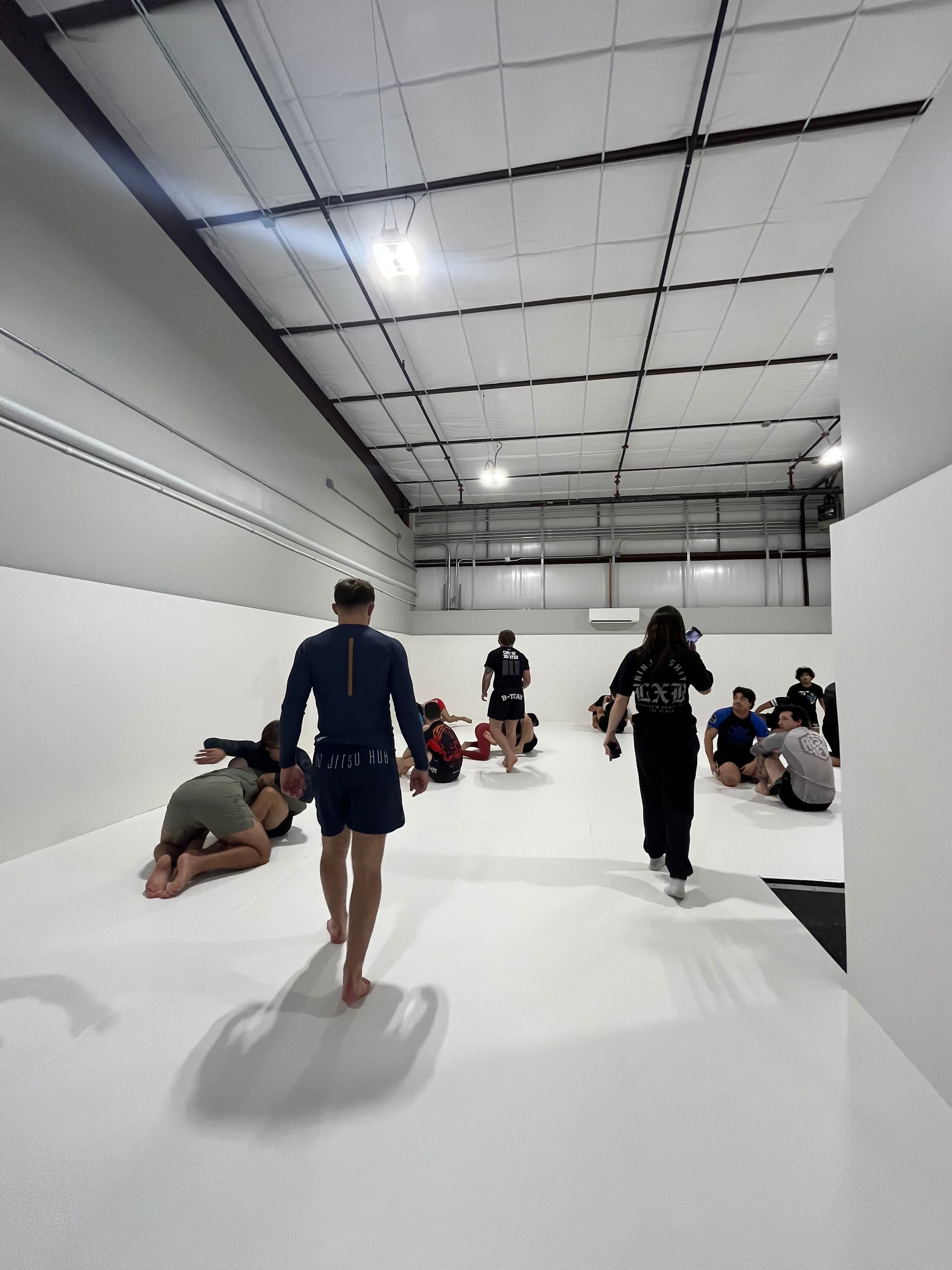
In our Georgetown gym, problem solving is built into the training. Every class gives kids a structured challenge, a safe amount of resistance, and clear rules. Your child learns to notice what is happening, make a choice, deal with feedback immediately, and adjust. That cycle repeats all class long, and over time it starts to look like confidence, composure, and persistence.
This matters locally, too. In a community like Georgetown, families juggle school, sports, church, clubs, and busy work schedules. Our goal is to make Kids Brazilian Jiu-Jitsu in Georgetown TX something that fits real routines while offering a real developmental payoff, not exaggerated promises.
Why Grappling is “live” problem solving, not just drilling
A lot of activities teach skills in a predictable way: do the drill, get the result, move on. Grappling is different because your child works with a partner who is actively (but safely) resisting. That means there is no single perfect answer that works every time. There is only the best next decision.
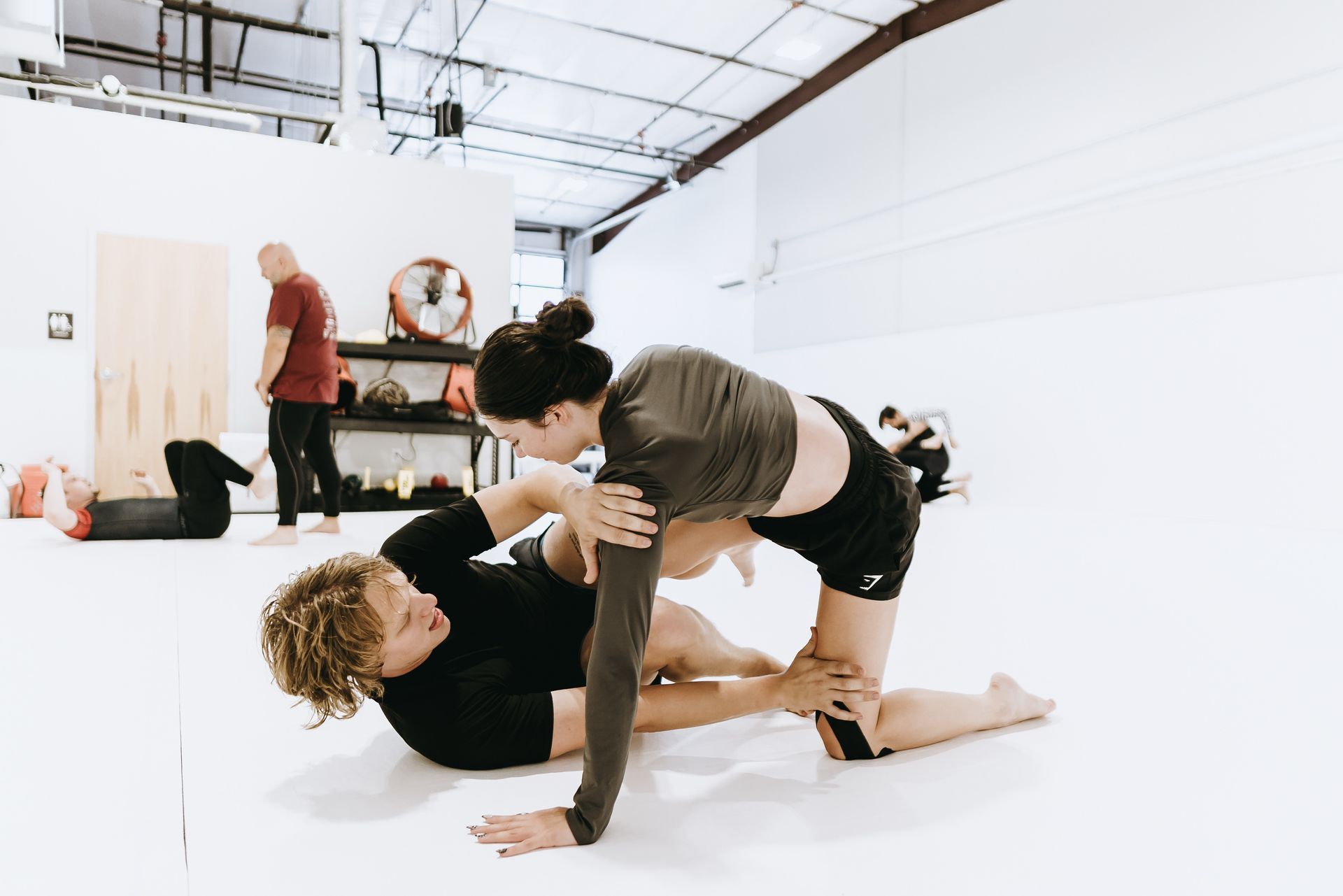
In Kids Brazilian Jiu-Jitsu, we teach kids to solve small problems under gentle pressure. If a partner holds them down, the problem is not “win.” The problem is “create space,” “protect your arms,” “turn to your side,” or “escape to a safer position.” Kids quickly learn that rushing and panicking wastes energy. Thinking and moving with purpose works better.
This is also why Kids Jiu-Jitsu in Georgetown TX is such a strong match for kids who need practice with patience. On the mat, trying harder does not always help. Trying smarter does.
What “feedback” looks like on the mat
Feedback in our classes is immediate and clear:
Your base was too narrow, so you fell over. Your arms were extended, so you got stuck. You held your breath, so you tired out. None of that is moral judgment. It is information. Kids learn to treat mistakes like data, which is a life skill most adults are still working on.
The problem-solving ladder we coach, step by step
When kids get stuck, we do not want them to freeze or explode. We coach a simple progression that keeps them moving forward without turning the room into chaos.
Here is the basic ladder we reinforce in class:
1. Notice the problem - Where are you stuck and what is your partner controlling
2. Breathe and stay safe - Protect your neck, keep elbows close, tap if needed
3. Try one clear option - An escape, a hip movement, a grip break, a turn
4. Observe the result - Did you create space or make it worse
5. Adjust and try again - Change angle, switch sides, ask a coach for help
This sounds straightforward, but for kids it can be huge. It is practice in not spiraling. It is also practice in staying teachable, even when they are tired or embarrassed.
Five real-life skills Kids Brazilian Jiu-Jitsu can reinforce
Research support is strongest for youth martial arts overall, not every claim about Brazilian Jiu-Jitsu specifically. Reviews associate martial arts participation with benefits like physical fitness, mindfulness, self-control, stress reduction, emotional resilience, and prosocial behavior. We take that seriously and keep our claims grounded. What we can confidently say is that the structure of grappling gives kids repeated, supervised practice with skills parents want to see outside the gym.
Adaptability: switching plans without giving up
If one escape does not work, we teach your child to try the next best option. That is adaptability in its simplest form. Over time, kids stop treating a failed attempt as a dead end. It becomes a signal to adjust.
You can see how that transfers to school: a math problem that needs a different method, a writing assignment that needs a new outline, or a group project where the first plan falls apart.
Emotional regulation: staying calm when it gets hard
Kids feel real frustration on the mat. They might lose a position, get pinned briefly, or have to tap. With good coaching, those moments become training reps for self-regulation.
We use calm corrections, clear boundaries, and short resets. A kid learns, “I can be uncomfortable and still think.” That lesson shows up later when your child has to sit through a tough conversation or handle disappointment without melting down.
Persistence: returning to the challenge
There is something uniquely constructive about controlled “failure” in grappling. Your child can lose, reset, and try again within seconds. That quick cycle reduces the fear of mistakes. It teaches recovery.
Persistence is not about endless intensity. It is about returning to the task with a better plan and a steady attitude, even if the last round went badly.
Communication and boundaries: working with a partner
Kids learn that training is cooperative even when it is competitive. A good round requires both partners to follow rules, match intensity, and respect the tap.
In plain terms, kids practice:
• Saying “stop” clearly and immediately when something feels wrong
• Listening when a partner says “stop” without arguing
• Taking turns and sharing space on the mat
• Using control instead of wild strength
Those are social skills, but they are also problem-solving skills. They help kids navigate conflicts without escalating.
Judgment: choosing the safest, smartest next move
We teach kids to choose positions and movements that keep them safe. That includes learning when to slow down, when to reset, and when to tap. Good judgment is a major part of Jiu-Jitsu in Georgetown TX, especially for kids who are energetic and tend to rush.
We also keep a clear line between training and real life. We frame skills as gym skills, used responsibly and with permission, not something to “try on friends.”
Why No-Gi training works well for kids and beginners
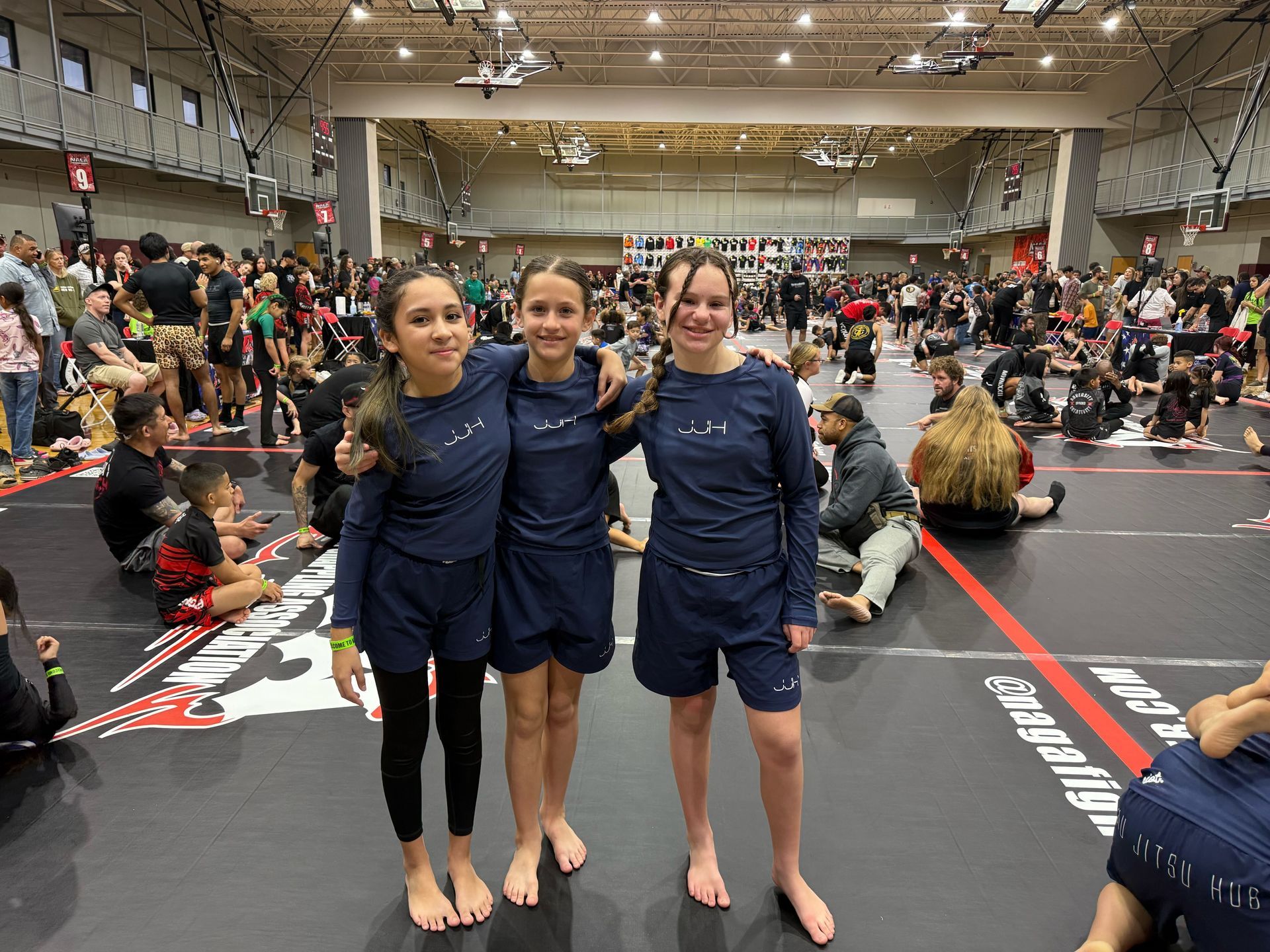
Our kids program is No-Gi, which means kids train in athletic clothing rather than a traditional uniform with a jacket. Many families like the simplicity. It can feel more like a sport practice than a formal martial arts class, which helps nervous beginners walk in and settle down.
No-Gi also encourages movement fundamentals: posture, balance, hip motion, and learning to connect your whole body. It is less about grabbing fabric and more about controlling space and position, which is exactly where the problem solving lives.
If your child is brand new, we start with simple goals. Not “submit your partner.” More like “hold a strong base,” “escape safely,” and “learn where your arms and legs should be.”
Safety first: what responsible Kids Grappling should include
Martial arts are not risk-free. Youth training can involve joint, neck, and concussion risks, especially if intensity is unmanaged or supervision is loose. We treat safety as part of the curriculum, not a side note.
In our kids classes, safety is built around a few non-negotiables:
• Close supervision, with coaches actively watching pairs and stepping in early
• Age-appropriate technique choices, with careful limits around joints and neck
• Clear tapping and verbal-stop rules, practiced often so kids do not hesitate
• Partner matching by size, age, maturity, and experience, not just “pair up”
• Progressive intensity, moving from movement games to drills to controlled live rounds
• Clear communication with parents about any injury concerns and next steps
We also keep the environment grappling-focused. There is no striking in this kids program. The goal is controlled practice, not chaos.
What a first class usually looks like for a new child
Walking into a new gym can feel like a lot for kids. We try to make the first experience predictable and friendly, without turning it into a big production.
A typical first class often includes:
A quick orientation and expectations
We show kids where to line up, how to move safely around others, and what the basic rules are. We keep it simple: listen, be kind, tap early, and take care of your partner.
Movement-based warmups that build coordination
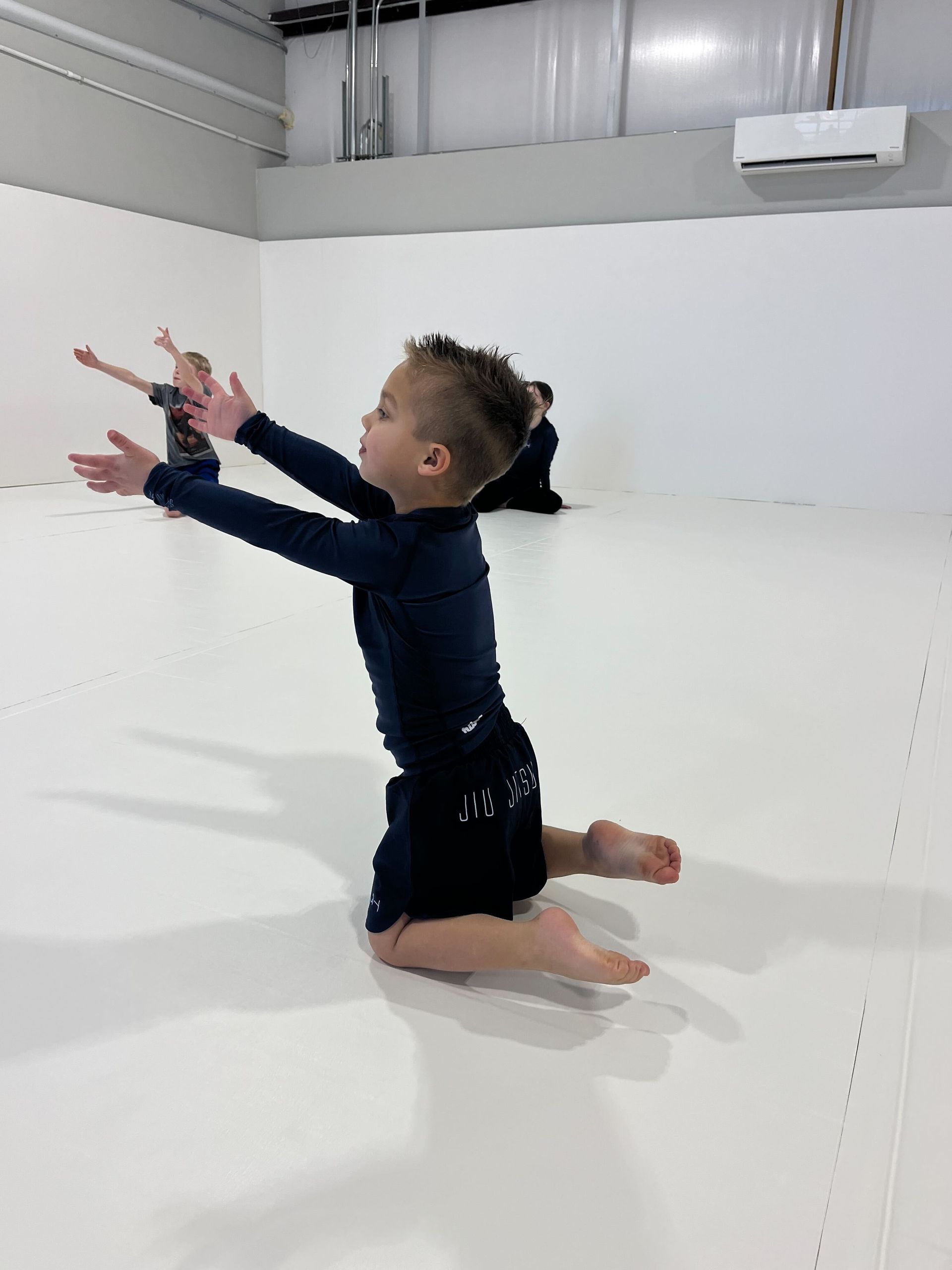
You will see animal walks, rolls, shrimping, and bridging. These look like games, but they teach the body mechanics kids use later to escape and reverse positions.
One or two core skills, taught in plain language
We might teach a basic escape, a safe control position, or how to hold posture. We demonstrate, then kids try it with a partner while we coach details.
Controlled partner practice
This is where the “real” problem solving starts. We keep the intensity appropriate and help kids reset quickly if frustration shows up.
A positive closing routine
We end with structure. Kids line up, review a key idea, and finish in a way that feels orderly. For many kids, that closing routine is surprisingly grounding.
Helping different personalities succeed on the mat
Not every kid walks in confident. Some are shy and cautious. Some are bouncy and impulsive. Some get frustrated fast. Kids Brazilian Jiu-Jitsu works best when coaching meets the child where your child is that day, not where we wish your child would be.
If your child is shy or anxious
We can start with low-pressure drilling and clear roles: “You do this part, then switch.” We also keep instructions concrete. A shy child often relaxes when expectations are predictable.
If your child is highly energetic
We channel that energy into structure: start and stop signals, short rounds, and specific goals. Kids learn that control is part of success, not a penalty.
If your child gets frustrated easily
We teach micro-wins: “You escaped the grip,” “You remembered to breathe,” “You tapped correctly.” That reframes progress as skill development, not perfection.
Questions Georgetown parents should ask before signing up
You deserve clear answers, especially when an activity includes contact. If you are considering Kids Jiu-Jitsu in Georgetown TX, here is a practical checklist that helps you evaluate readiness and fit:
• What ages can join, and how are kids grouped for training
• How do coaches pair partners by size and maturity during drills and live rounds
• What rules exist for tapping, verbal stops, and stopping unsafe movement
• What should your child wear for No-Gi, and what should you bring to class
• Can you watch class, and where should parents sit during training
• What does progression look like from beginner movement work to controlled sparring
• What is the procedure if your child has an injury or a possible concussion concern
We welcome those questions, because good training is transparent.
Take the Next Step with Jiu-Jitsu Hub
If you want an activity that teaches your child how to face challenges with a calmer mind and a smarter plan, Kids Brazilian Jiu-Jitsu is a strong place to start. The techniques matter, but the bigger win is the repeated practice: notice a problem, stay composed, try a solution, and adjust.
Our Kids No-Gi program at
Jiu-Jitsu Hub in Georgetown is designed to develop physical skills and real-world decision-making in a supportive, closely coached environment. When you are ready, we can help you check the class schedule, figure out what your child should wear, and make the first class feel simple and doable.
Build stronger fundamentals and sharpen your technique through
consistent training at Jiu-Jitsu Hub.