The fastest way to feel stronger and more capable is to practice skills that work under pressure, one class at a time.
Georgetown keeps growing, and you can feel it in the traffic, the new neighborhoods, and the constant shuffle of people getting settled. With that growth comes a simple question we hear all the time: what is a practical way to get in shape, meet good people, and feel genuinely confident again? For many adults, Jiu-Jitsu checks those boxes without requiring you to already be “a gym person.”
We built our training around real progress you can measure: better movement, stronger decision-making under stress, and a calmer mindset when life gets hectic. It is not about being tough for the sake of it. It is about learning how to solve problems with your body and your brain working together.
If you are searching for Jiu-Jitsu in Georgetown TX, you are probably looking for more than a workout. You want structure, coaching that makes sense, and a place where beginners are treated like beginners, not like interruptions.
Why Jiu-Jitsu fits Georgetown right now
Georgetown is expanding fast. One local projection puts the 2026 population around 115,088 residents with annual growth near 7.65 percent, and another report notes roughly 58 percent growth from 2020 to 2025. That kind of change means a lot of people are new to town, rebuilding routines, and trying to find community close to home.
A martial arts program works especially well in a growing suburb because it creates a weekly anchor. You show up after work, train with familiar faces, and gradually feel more connected to where you live. You also get something you can carry into daily life: confidence that comes from skill, not from hype.
Modern Jiu-Jitsu has also shifted in a way that benefits everyday adults. Training trends emphasize efficiency: positional sparring, drilling with a purpose, video review, and recovery instead of simply “go harder.” That is good news if you want to improve without beating yourself up.
Strength that is useful, not just exhausting
A lot of fitness programs chase fatigue. We chase control. In Jiu-Jitsu, you build strength through posture, pressure, and leverage, which means your body learns to produce force in realistic positions, not just in a straight line on a machine.
You will notice strength changes in a few specific ways:
• Your grip and pulling strength improve because you are constantly managing frames, ties, and control points
• Your core gets stronger from bracing, rotating, and staying balanced while someone actively tries to move you
• Your hips and legs develop “mat strength” from bridging, posting, standing up safely, and driving with good alignment
• Your endurance becomes more repeatable because rounds teach you to regulate effort instead of sprinting until you crash
This is also where the “real confidence” part starts to show up. When you can maintain posture under pressure and still think clearly, your nervous system learns that stress is manageable.
Focus and mental clarity: the underrated benefit
One reason adults stick with Jiu-Jitsu is that it forces your attention into the present. You cannot half-participate. If you drift, you lose position. That sounds intense, but it is actually refreshing. For an hour, your phone is irrelevant and your to-do list gets quiet.
Research summaries on adult practitioners report common self-described benefits like improved confidence, reduced anxiety, stronger commitment, and better mental resilience. We see the practical version of that in class: students start making calmer choices, breathing better, and recovering faster after a tough round.
Focus in Jiu-Jitsu is not just “trying harder.” It is learning a simple loop:
• Notice what is happening
• Choose a priority (base, posture, frames, or escape)
• Execute one clean action
• Reset and improve the next repetition
That mindset shows up at work and at home in a surprisingly natural way.
A modern approach: wrestling, top control, and smarter training
If you have watched any recent competition footage, you have probably seen the sport getting more athletic and tactical. Wrestling integration has become one of the clearest trends, and it matters even if you never plan to compete. Being able to move from standing to the ground safely, get on top, and stay on top is practical.
We teach takedown entries and standing control in a way that respects safety and skill level. You do not need to slam or explode to learn wrestling concepts. You need fundamentals: stance, balance, hand fighting, and timing.
Another major shift is the renewed emphasis on pressure passing and top-position control. For a long time, many hobbyists only saw flashy guard work online. That is fun, but control is what helps you feel secure, especially as a beginner. When you understand how to pin, stabilize, and progress position, the whole art becomes less chaotic.
We also pay attention to the “smarter training” trend: more positional rounds, clearer game plans, and enough recovery to keep you training consistently. Consistency beats intensity almost every time.
Gi vs no-gi: what you need to know before you start
We keep the explanation simple because beginners deserve simple answers. In the gi, you wear a traditional uniform and grips matter a lot. In no-gi, you wear athletic gear and the pace often feels faster because there is less fabric control.
A 2026 industry article notes that no-gi has overtaken gi as the dominant competitive format, and Jiu-Jitsu is increasingly viewed as a mainstream fitness modality. That does not mean you have to pick a side. It means it is normal to train both and enjoy the different benefits.
If your goal is self-defense and fitness, both formats help. Gi builds patience, posture, and grip-based control. No-gi builds movement, scrambling awareness, and a wrestling-friendly approach. We will guide you based on what you want and what fits your schedule.
Adult Brazilian Jiu-Jitsu in Georgetown TX: what beginners can expect
If you are looking specifically for Adult Brazilian Jiu-Jitsu in Georgetown TX, you probably want to know what the first month feels like. Here is the honest version: week one can feel like learning a new language. You will hear terms, see positions, and occasionally wonder how your body ended up turned that direction. That is normal.
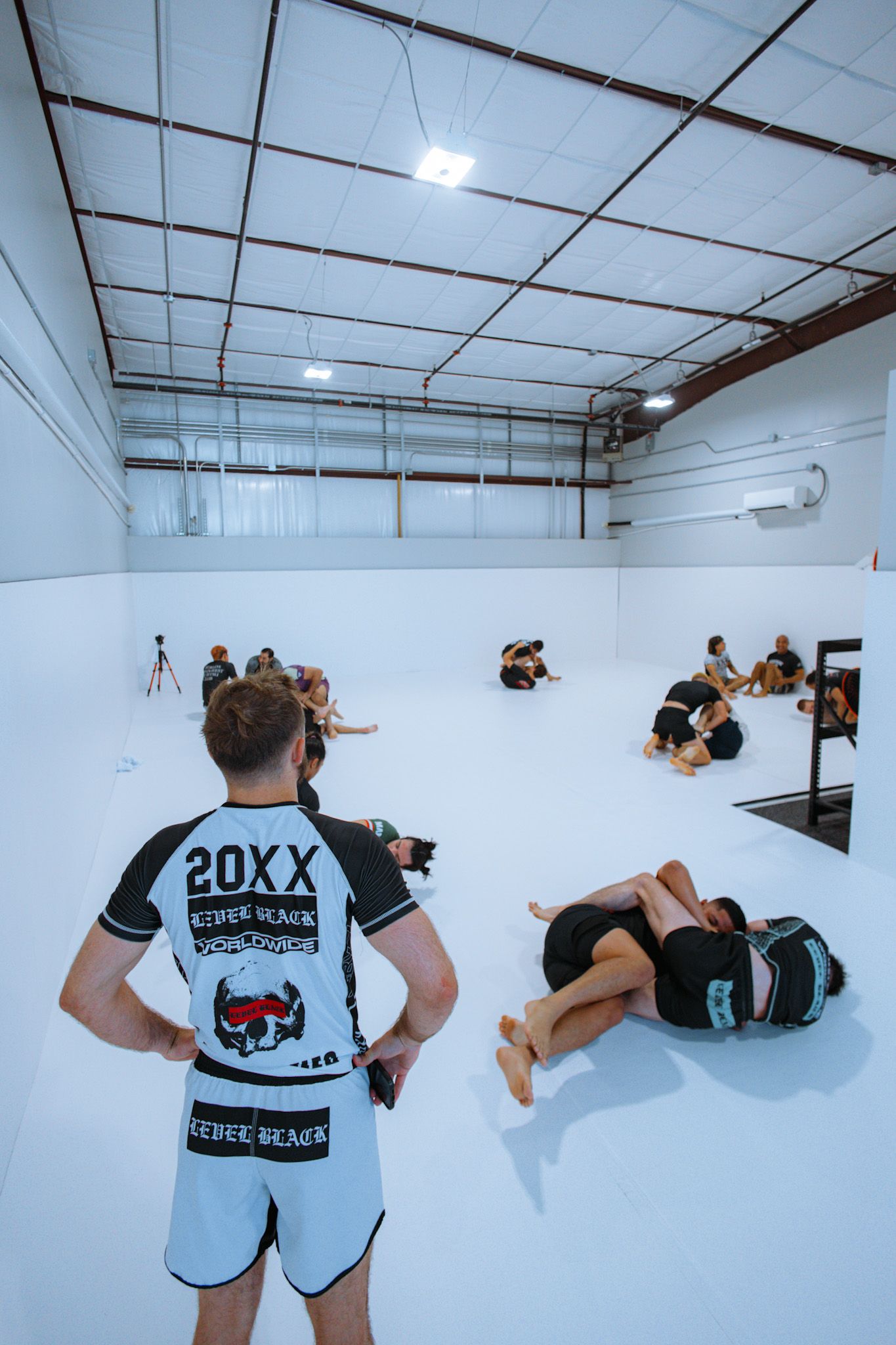
Our beginner experience is built to reduce overwhelm. We teach core positions first and repeat them often so your brain has time to build a map. You will practice techniques with a partner, then apply them in controlled scenarios where the goal is learning, not winning.
A typical class includes:
1. A warm-up designed for mobility, coordination, and injury prevention
2. Technical instruction with clear steps and common mistakes to avoid
3. Drilling so your body can repeat the motion enough times to remember it
4. Positional sparring where you start in a specific situation and work one goal
5. Optional live rounds when you are ready, with coaching on pacing and safety
That last part matters. You do not have to spar on day one. We would rather you build fundamentals and confidence than rush into chaos.
Safety, pacing, and training at any age
Adults ask about safety for good reason. We take it seriously. Jiu-Jitsu is a contact sport, but it can be trained responsibly when the culture values control. Our coaching emphasizes tapping early, using good mechanics, and choosing training intensity that matches your current fitness.
If you are a masters-age athlete, returning to training after years away, or simply managing a busy body that sits at a desk most days, we help you ramp up without trying to “prove” anything. You will get more out of training when you leave class feeling challenged but not wrecked.
We also encourage recovery habits that support long-term progress: hydration, sleep, mobility work, and spacing hard sessions with lighter technical days.
What to wear to your first class (and what to bring)
Keeping this practical helps a lot. If you are starting no-gi, wear a fitted athletic shirt or rash guard and shorts or leggings without pockets or zippers. If you are starting in the gi, we can help you figure out uniform options and sizing.
Bring a water bottle and arrive a little early so we can get you oriented. Most first-timers feel better after learning a few basic rules: keep nails trimmed, remove jewelry, and ask questions whenever something is unclear. No one expects you to know the etiquette right away.
How often should you train to see results?
We like realistic plans because real life happens. For most adults, two classes per week is a strong starting point. It is enough to build momentum and retain what you learn. Three times per week accelerates progress if your schedule and recovery can handle it.
If you can only do once per week at first, we still want you on the mats. The key is consistency over time, not a perfect month followed by quitting.
A simple guideline we share is:
• 1 day per week for learning and stress relief
• 2 days per week for steady skill-building and fitness improvement
• 3 days per week for faster progression and stronger conditioning
We help you match your plan to the class schedule and your goals, whether those goals are self-defense, fitness, or just feeling more confident walking around town.
When will you feel comfortable sparring?
Comfort is different from readiness, so we look at both. Many adults start light positional sparring within the first couple of weeks because it is structured and less intimidating than full rounds. Full live rounds usually feel better once you understand basic escapes, how to tap, and how to breathe through pressure.
Expect a learning curve, but also expect small wins early: escaping a pin, holding top position for a few seconds, or remembering a technique under stress. Those moments add up quickly, and they are the real proof that you are improving.
Take the Next Step
If you want a training routine that builds strength, focus, and confidence in a way that carries into everyday life, we are ready to guide you. Our approach keeps the learning process clear, beginner-friendly, and aligned with how modern Jiu-Jitsu is evolving: smarter training, wrestling-aware fundamentals, and control-first progress.
When you are ready,
Jiu-Jitsu Hub is here in Georgetown with a program built for working adults and newcomers who want structure and a welcoming place to train. We will help you get started, stay consistent, and feel the difference in the first month, not just “someday.”
Improve your fitness, confidence, and grappling skills through
regular training at Jiu-Jitsu Hub.